
Industry news
What makes limestone cement-grade: chemistry, not just rock
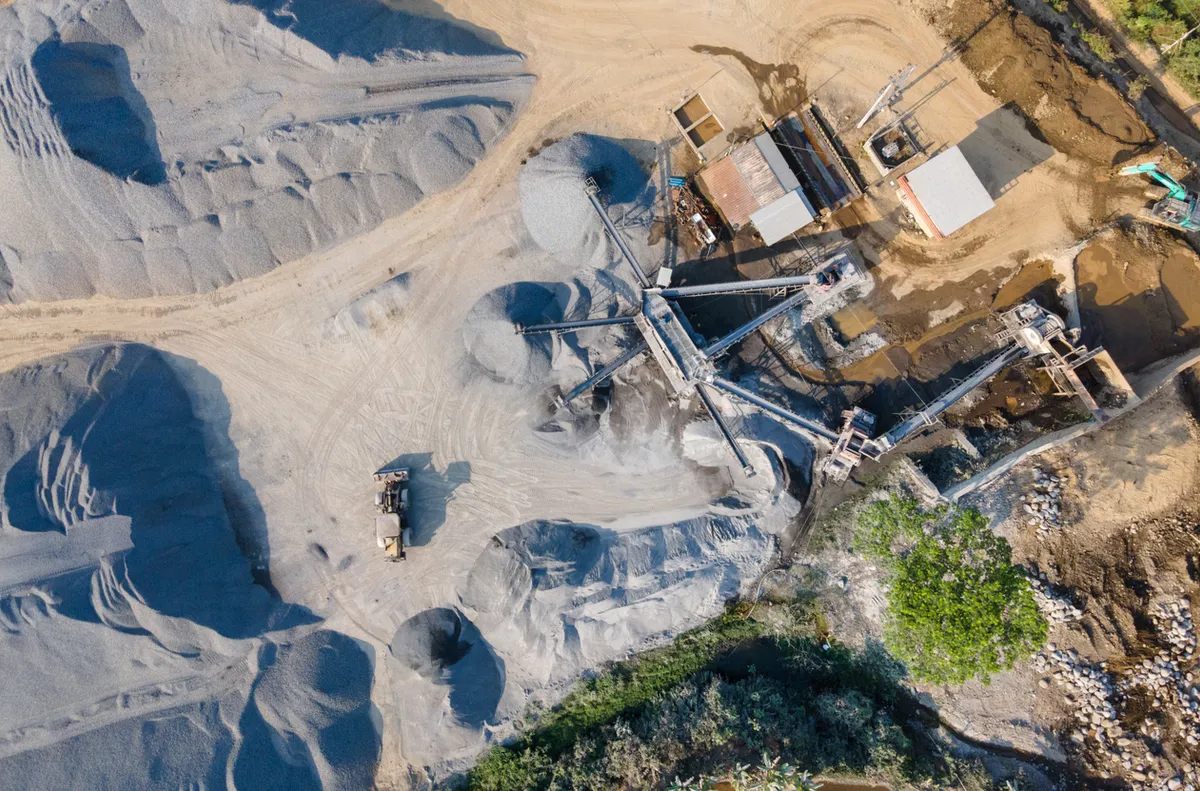
Two blocks of limestone can look the same and be worth very different amounts to a cement plant, because the plant buys on chemical analysis.
One published norm
The Indian Minerals Yearbook 2012, from the Indian Bureau of Mines, reproduces a 2001 norm from India’s National Council for Cement and Building Materials. For run-of-mine limestone, meaning stone as it comes from the quarry, used to make ordinary Portland cement, it sets out:
- Calcium oxide (CaO), the measure of how much calcium the stone holds: 44 to 52%.
- Magnesium oxide (MgO): 3.5% at most.
- Silica, alumina and iron oxide: whatever is needed to meet the plant’s lime saturation factor and modules, which are the ratios the kiln recipe is built around.
- Alkalis, sulphur and phosphorus: each below 0.6%, and chlorine below 0.015%.
The yearbook calls magnesia, sulphur and phosphorus deleterious. It says more than 1% phosphorus pentoxide slows the setting of Portland cement considerably.
Limits that can bend
The norm also gives wider limiting values, at least 40% CaO and at most 5% MgO, which take into account other types of cement and the scope for beneficiation and blending. In other words, stone outside the main range is not automatically ruled out. With beneficiation or blending it may still make a usable feed.
Why it matters at the quarry
Cement plants usually blend stone in stockpiles before it goes to the kiln, so what counts is the average chemistry of the blend. Chemistry also varies from one part of a quarry to another. Meeting the target on average therefore means knowing the chemistry of the stone face by face. That is the job of grade control: sampling and laboratory analysis of the stone as it is drilled and loaded, so that each load can be sent where it is needed or blended.
Reading it with care
This is one Indian norm from 2001. Each plant sets its own targets, and we have not found published specifications for Nigerian plants, so a buyer should ask the plant for its own. Nothing here describes the chemistry of any particular deposit.