
Industry news
Drill and blast in limestone: powder factor, bench height and hole size
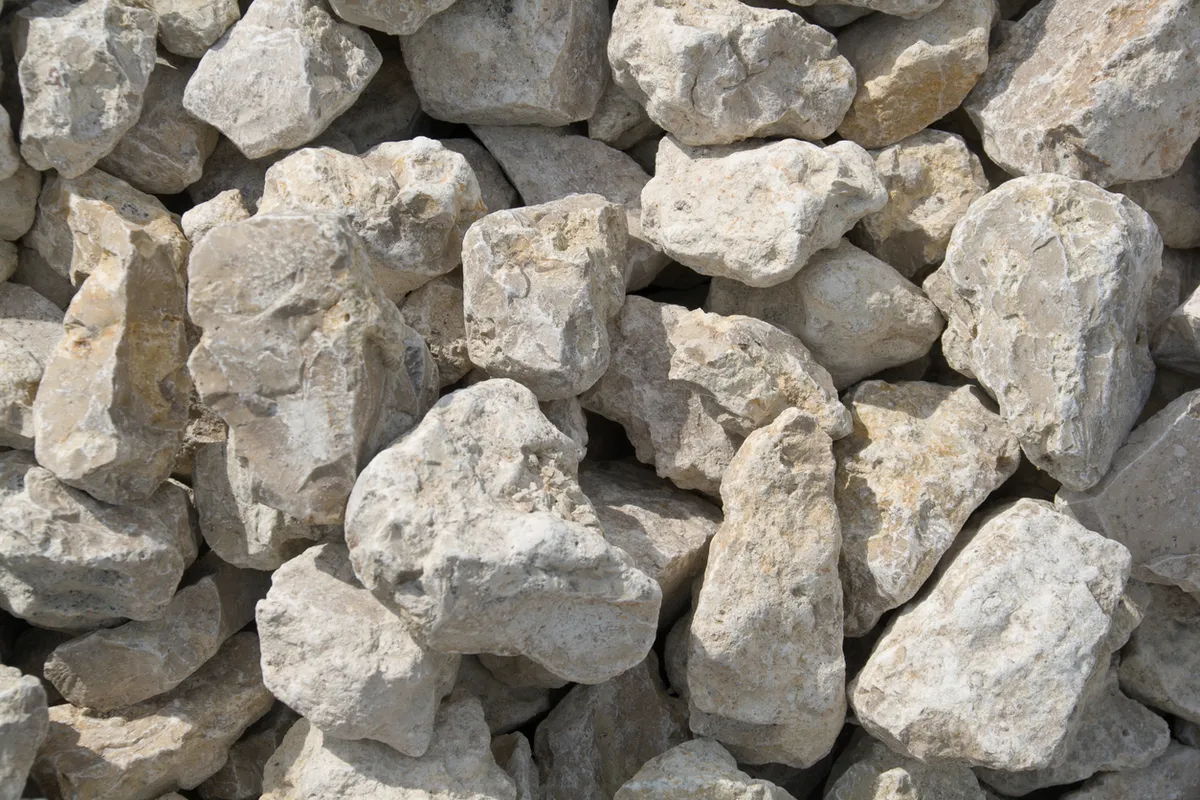
Blasting sets the starting condition for everything after it. Oversized rock slows loading and can block the primary crusher, and too many fines can be waste in some products. One of the studies below puts it plainly: the size distribution of blasted rock directly affects the efficiency and cost of the production steps that follow.
Powder factor
Powder factor is the weight of explosive used for each cubic metre of rock broken, in kilograms per cubic metre. More explosive generally breaks rock finer, and costs more. A 2025 modelling study of an open-pit limestone mine in Scientific Reports recommends 0.31 to 0.51 kg/m³ for its site.
Bench height
The same study modelled how the shape of the benches, the steps cut into the quarry wall, affects slope stability and output:
- Cutting bench height from 12 m to 5 m improved the stability factor by 43.78%.
- Easing the bench face angle from 90° to 60° improved it by 17.12%.
- Steepening the overall slope from 27.5° to 36.5° raised productivity by 57.14%, but cut stability by 17.12%.
The authors settled on a balance: a 7.5 m bench, a 75° face and a 14 m bench width. That gave a stability factor of 1.31 under static loading and 1.16 under dynamic loading. The trade-off is the real finding. A steeper slope gets more stone out of the same ground and leaves a less stable wall.
Hole diameter
A second 2025 study in the same journal tested blast-hole diameters from 90 to 190 mm in simulation, holding the powder factor constant. Average fragment size changed with hole diameter even though the amount of explosive per cubic metre did not.
In field blasts at the mine, 115 mm holes were compared with 140 mm holes:
- The share of fragments larger than 900 mm was 52.91% lower.
- The share of fines, 0 to 5 mm, was 33.85% lower.
- The share of 20 to 40 mm fragments was 71.40% higher.
Starting points, not settings
These numbers belong to the rock in those mines. Jointing, rock strength and the crushing plant that follows all change the best answer, and the authors’ answers come from modelling and field tests at their own mines. What carries over is the direction: bench height, hole size and powder factor each move the result, and each is worth testing against what the crusher needs.