
Industry news
Jaw or impact: how the crusher shapes crushed stone
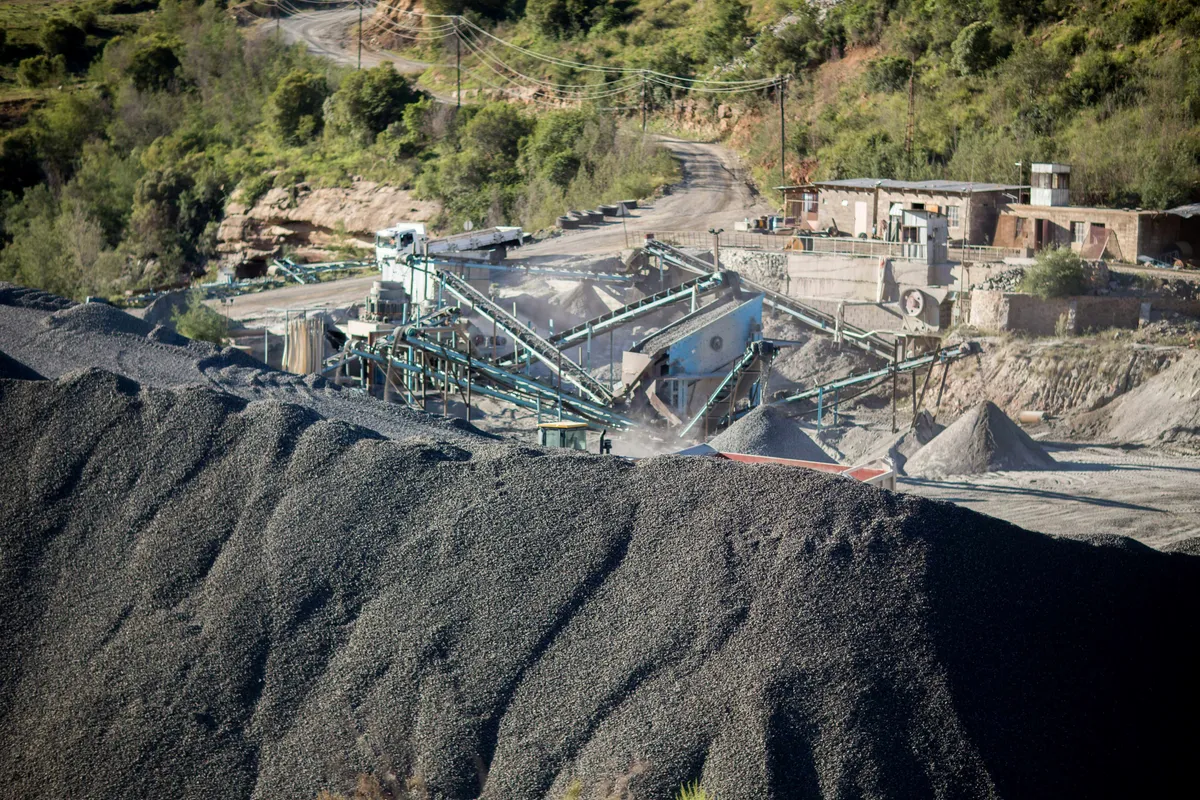
A crusher does more than reduce size. It also shapes each particle, and shape affects how aggregate performs once it is in the road or the mix.
What the study did
A 2026 paper in Materials crushed six rock-forming minerals, including calcite, the main mineral in limestone, in both a jaw crusher and an impact crusher. It then measured the shape, angularity and surface texture of the particles with an imaging system.
Shape
The impact crusher produced more cubical particles. Average sphericity was 0.666 for the impact crusher against 0.607 for the jaw crusher. The jaw crusher produced more flat and elongated particles.
This matters for roads. The authors note that cubical, angular particles lock together into a stable skeleton in asphalt, while a high share of flat and elongated particles breaks that skeleton and reduces how much load the road can carry.
Angularity and texture
Surface texture was almost the same from both machines, with an average index of 333.83 for the impact crusher and 332.67 for the jaw crusher. The authors conclude that texture is set by the rock itself and hardly changes with the crushing method.
Angularity went the other way. For calcite and pyroxene the jaw crusher gave more angular particles, so the authors suggest a jaw crusher when angularity is wanted from calcite-rich stone. In short, the impact crusher gave more cubical stone and the jaw crusher gave more angular stone. Which matters more depends on what the aggregate is for.
Wear and moisture
One manufacturer’s selection guide says limestone’s low abrasiveness extends wear-part life. It points to cone crushers for harder or more abrasive limestone, and to jaw crushers for moist, sticky stone. That is a supplier’s view, so test it on your own stone.
Reading it with care
This was a laboratory test on single-mineral samples, and it looked at aggregate for asphalt. A working quarry crushes mixed rock through several stages, with screens sending oversize back, so the machine order and settings matter as well as the machine type. The choice comes down to trade-offs between shape, angularity, wear and moisture, and a trial on the actual stone settles it.